Selasa, 22 Maret 2011

[I311.Ebook] Free Ebook Love Poems, by Nikki Giovanni

Free Ebook Love Poems, by Nikki Giovanni

Love Poems, By Nikki Giovanni. Accompany us to be participant here. This is the site that will certainly offer you ease of browsing book Love Poems, By Nikki Giovanni to read. This is not as the various other site; the books will certainly remain in the forms of soft file. What benefits of you to be participant of this website? Get hundred collections of book connect to download and install and also get consistently upgraded book everyday. As one of the books we will offer to you currently is the Love Poems, By Nikki Giovanni that comes with a quite satisfied concept.

Love Poems, by Nikki Giovanni

Love Poems, by Nikki Giovanni


Love Poems, by Nikki Giovanni

Free Ebook Love Poems, by Nikki Giovanni

New updated! The Love Poems, By Nikki Giovanni from the very best writer as well as publisher is currently readily available below. This is guide Love Poems, By Nikki Giovanni that will certainly make your day reviewing ends up being finished. When you are seeking the published book Love Poems, By Nikki Giovanni of this title in guide establishment, you might not find it. The issues can be the restricted versions Love Poems, By Nikki Giovanni that are given up guide shop.

As one of the home window to open up the new world, this Love Poems, By Nikki Giovanni provides its incredible writing from the author. Published in one of the preferred authors, this book Love Poems, By Nikki Giovanni becomes one of the most wanted publications lately. Actually, the book will certainly not matter if that Love Poems, By Nikki Giovanni is a best seller or not. Every publication will always give ideal resources to get the reader all finest.

However, some people will seek for the best vendor publication to check out as the first recommendation. This is why; this Love Poems, By Nikki Giovanni is presented to fulfil your requirement. Some individuals like reading this publication Love Poems, By Nikki Giovanni due to this prominent publication, however some love this because of preferred writer. Or, numerous likewise like reading this book Love Poems, By Nikki Giovanni because they truly should read this book. It can be the one that actually enjoy reading.

In getting this Love Poems, By Nikki Giovanni, you could not constantly pass walking or using your electric motors to guide stores. Get the queuing, under the rain or hot light, and also still hunt for the unidentified publication to be in that book store. By seeing this web page, you could only look for the Love Poems, By Nikki Giovanni and also you can find it. So now, this time around is for you to choose the download link and also purchase Love Poems, By Nikki Giovanni as your own soft documents publication. You could read this publication Love Poems, By Nikki Giovanni in soft documents just and save it as yours. So, you don't need to hurriedly put the book Love Poems, By Nikki Giovanni into your bag almost everywhere.

Love Poems, by Nikki Giovanni

In a career that has spanned more than a quarter century, Nikki Giovanni has earned the reputation as one of America's most celebrated and contoversial writers.Now, she presents a stunning collection of love poems that includes more than twenty new works.

From the revolutionary "Seduction" to the tender new poem, "Just a Simple Declaration of Love," from the whimsical "I Wrote a Good Omelet" to the elegiac "All Eyez on U," written for Tupac Shakur, these poems embody the fearless passion and spirited wit for which Nikki Giovanni is beloved and revered.

Romantic, bold, and erotic, Love Poems expresses notions of love in ways that are delightfully unexpected. Articulating in sensuous verse what we know only instinctively, Nikki Giovanni once again confirms her place as one of our nations's most distinguished poets and powerful truth-tellers.

In a career that has spanned more than a quarter century, starting with her explosive early years in the Black Rights Movement, Nikki Giovanni has earned a reputation as one of America's most celebrated and controversial writers. Her mind-speaking work has made her a universal favorite and a number-one best-seller.The love poems-the revolutionary "Seduction," the whimsical "I Wrote a Good Omelet," and the tender "My House" to name just a few-are among the most beloved of all Nikki Giovanni's works. Now, Love Poems brings together these and other favorites with over twenty new poems. Romantic, bold, and erotic, Love Poems will once again confirm Nikki Giovanni's place among the country's most renowned poets and truth tellers.

  • Sales Rank: #350660 in Books
  • Color: Red
  • Brand: Giovanni, Nikki
  • Published on: 1997-02-14
  • Released on: 1997-02-14
  • Original language: English
  • Number of items: 1
  • Dimensions: 7.00" h x .49" w x 5.50" l, .43 pounds
  • Binding: Hardcover
  • 64 pages

From Library Journal
The bold, romantic, and sometimes erotic poems found here include "Seduction," "I Wrote a Good Omelet," and "My House."
Copyright 1996 Reed Business Information, Inc.

From Booklist
In one way or another, love shapes most of Giovanni's smart, to-the-point, and emotionally candid poems, but it's wonderful to have a volume devoted strictly to her love poems, especially since it contains 20 new compositions. Giovanni is one of America's most popular poets, because she speaks her mind clearly and has such a good time doing it. As she writes in "A Poem: For Langston Hughes": "wool is sheared . . . silk is spun / weaving is hard . . . but words are fun," a sentiment she brings to rich fruition in her more playful poems, rhyming wonders reminiscent of old blues lyrics where every line is a double entendre, the sort of hand-on-your-hip songs Bessie Smith and Dinah Washington sashayed and smiled their way through. But Giovanni turns more somber and reflective as she expresses the love of a daughter and mother, and a woman's deep-down love for a man that far outlasts the giddy romp of romance. Donna Seaman

Review
1995
All Eyez On U
And I Have You
And Yeah...this Is A Love Poem
August
Balances
Beautiful Black Men
The Butterfly
Cancers (not Necessarily A Love Poem)
Communication
For Theresa
For Tommy
Giddiyap
A Greater Love Of God And Country
A Happy Reason
Her Flying Trapeze
How Do You Write A Poem?
I Do Have My Likes And Dislikes
I Take Master Card
I Want To Sing
I Wrote A Good Omelet
Just A New York Poem
Just A Simple Declaration Of Love
Kidnap Poem
Love In Place
Love Is
Luxury
Mothers
My House
No Furnaces (for Valentine's Day)
The Only True Lovers Are Chefs Or Happy Birthday, Edna Lewis
A Poem
Poem
A Poem Of Friendship
Poetry Is A Trestle
Rain
Resignation
Seduction
A Summer Love Poem
Swaziland
Telephone Poem
That Day
A Theory Of Pole Beans
Things That Go Together
Three/quarters Time
The Way I Feel
What It Is
When Gamble And Huff Ruled
When I Nap
You Are There
You Came, Too
You Were Gone
-- Table of Poems from Poem Finder�

More than twenty new poems are included in this anthology, which gathers the black author's love poems. This just missed February feature for Valentine's Day but deserves ongoing, year-round mention as an excellent gathering of Giovanni classics centered around a powerful theme. -- Midwest Book Review

Most helpful customer reviews

14 of 15 people found the following review helpful.
A softer side of Nikki
By Je'Niece N. McCullough
I loved this book. This book contains a poem for every stage, every feeling that love encompasses. I enjoy the hard-edged angry Nikki, but I also appreciate this softer, warmer side of her. I think the fire and passion are still there, just packaged more softly. One of my favorites is "I Wrote a Good Omelet." If you've ever loved anyone or hope to someday, you should appreciate this one.

15 of 18 people found the following review helpful.
Love Poem is a treasure and so is Nikki
By milsam7@hotmail.com
Hide "Love Poems" behind all those other scholarly, trendy, "book club-y" books - Hide it like you hide your new Victoria's Secret from you old lover - only to surprise him later. And when the time is right, do so. "Love Poems" adds a wonderful twist. It is real, seductive, poignant, and everything love is but you're afraid to stay out. loud. I LOVE IT & so does my BELOVED.

7 of 8 people found the following review helpful.
Looking forward to a romantic Valentine's Day with Nikki.
By A Customer
WOW! Thank you Nikki for reminding us how much we can learn from someone who has had long-lasting love. I bought this book because it was an Amazon Valentine recommendation and it made me want to throw my arms around my love the moment I finished it.
from "Love Is" :
Some people forget that love is tucking you in and kissing you "Good night" no matter how young or old you are

See all 56 customer reviews...

Love Poems, by Nikki Giovanni PDF
Love Poems, by Nikki Giovanni EPub
Love Poems, by Nikki Giovanni Doc
Love Poems, by Nikki Giovanni iBooks
Love Poems, by Nikki Giovanni rtf
Love Poems, by Nikki Giovanni Mobipocket
Love Poems, by Nikki Giovanni Kindle

Love Poems, by Nikki Giovanni PDF

Love Poems, by Nikki Giovanni PDF

Love Poems, by Nikki Giovanni PDF

Kamis, 17 Maret 2011

[K726.Ebook] PDF Ebook Cost Reduction Analysis: Tools and Strategies

PDF Ebook Cost Reduction Analysis: Tools and Strategies

Cost Reduction Analysis: Tools And Strategies. In what case do you like reading a lot? What about the type of the book Cost Reduction Analysis: Tools And Strategies The demands to check out? Well, everyone has their own reason ought to read some e-books Cost Reduction Analysis: Tools And Strategies Mostly, it will certainly associate to their necessity to get understanding from the publication Cost Reduction Analysis: Tools And Strategies and also wish to review merely to obtain enjoyment. Books, story e-book, as well as various other enjoyable e-books come to be so preferred this day. Besides, the scientific publications will additionally be the finest factor to choose, specifically for the students, educators, doctors, business person, and also other careers which enjoy reading.

Cost Reduction Analysis: Tools and Strategies

Cost Reduction Analysis: Tools and Strategies


Cost Reduction Analysis: Tools and Strategies

PDF Ebook Cost Reduction Analysis: Tools and Strategies

Cost Reduction Analysis: Tools And Strategies. The industrialized modern technology, nowadays support every little thing the human requirements. It consists of the daily tasks, works, office, enjoyment, as well as more. Among them is the great website link as well as computer system. This problem will relieve you to support among your pastimes, reading habit. So, do you have going to read this book Cost Reduction Analysis: Tools And Strategies now?

It is not secret when connecting the writing abilities to reading. Checking out Cost Reduction Analysis: Tools And Strategies will certainly make you get even more sources and also sources. It is a manner in which could boost exactly how you forget as well as recognize the life. By reading this Cost Reduction Analysis: Tools And Strategies, you can more than what you receive from other book Cost Reduction Analysis: Tools And Strategies This is a popular book that is published from popular author. Seen type the writer, it can be relied on that this book Cost Reduction Analysis: Tools And Strategies will certainly offer lots of inspirations, regarding the life and also encounter and also everything inside.

You could not have to be doubt about this Cost Reduction Analysis: Tools And Strategies It is easy way to get this book Cost Reduction Analysis: Tools And Strategies You could just visit the established with the web link that we give. Here, you can acquire guide Cost Reduction Analysis: Tools And Strategies by on the internet. By downloading and install Cost Reduction Analysis: Tools And Strategies, you could discover the soft documents of this publication. This is the exact time for you to start reading. Also this is not published book Cost Reduction Analysis: Tools And Strategies; it will precisely provide more benefits. Why? You could not bring the published book Cost Reduction Analysis: Tools And Strategies or stack guide in your property or the office.

You can finely include the soft data Cost Reduction Analysis: Tools And Strategies to the gadget or every computer hardware in your office or home. It will certainly help you to consistently proceed reviewing Cost Reduction Analysis: Tools And Strategies whenever you have downtime. This is why, reading this Cost Reduction Analysis: Tools And Strategies does not provide you issues. It will provide you crucial sources for you who intend to start composing, writing about the comparable publication Cost Reduction Analysis: Tools And Strategies are different book field.

Cost Reduction Analysis: Tools and Strategies

  • Published on: 1600
  • Binding: Hardcover

Most helpful customer reviews

See all customer reviews...

Cost Reduction Analysis: Tools and Strategies PDF
Cost Reduction Analysis: Tools and Strategies EPub
Cost Reduction Analysis: Tools and Strategies Doc
Cost Reduction Analysis: Tools and Strategies iBooks
Cost Reduction Analysis: Tools and Strategies rtf
Cost Reduction Analysis: Tools and Strategies Mobipocket
Cost Reduction Analysis: Tools and Strategies Kindle

Cost Reduction Analysis: Tools and Strategies PDF

Cost Reduction Analysis: Tools and Strategies PDF

Cost Reduction Analysis: Tools and Strategies PDF

Rabu, 16 Maret 2011

[P360.Ebook] PDF Download Biology and Medicine of Rabbits and Rodents, by John E. Harkness, Joseph E. Wagner

PDF Download Biology and Medicine of Rabbits and Rodents, by John E. Harkness, Joseph E. Wagner

Yeah, reviewing an e-book Biology And Medicine Of Rabbits And Rodents, By John E. Harkness, Joseph E. Wagner can add your friends checklists. This is among the solutions for you to be successful. As recognized, success does not suggest that you have great things. Comprehending and also knowing more than various other will provide each success. Next to, the notification and impression of this Biology And Medicine Of Rabbits And Rodents, By John E. Harkness, Joseph E. Wagner can be taken as well as chosen to act.

Biology and Medicine of Rabbits and Rodents, by John E. Harkness, Joseph E. Wagner

Biology and Medicine of Rabbits and Rodents, by John E. Harkness, Joseph E. Wagner


Biology and Medicine of Rabbits and Rodents, by John E. Harkness, Joseph E. Wagner

PDF Download Biology and Medicine of Rabbits and Rodents, by John E. Harkness, Joseph E. Wagner

This is it the book Biology And Medicine Of Rabbits And Rodents, By John E. Harkness, Joseph E. Wagner to be best seller recently. We give you the best deal by getting the amazing book Biology And Medicine Of Rabbits And Rodents, By John E. Harkness, Joseph E. Wagner in this site. This Biology And Medicine Of Rabbits And Rodents, By John E. Harkness, Joseph E. Wagner will certainly not only be the sort of book that is difficult to locate. In this web site, all kinds of publications are supplied. You could browse title by title, writer by writer, and publisher by author to discover the best book Biology And Medicine Of Rabbits And Rodents, By John E. Harkness, Joseph E. Wagner that you could read now.

Why should be book Biology And Medicine Of Rabbits And Rodents, By John E. Harkness, Joseph E. Wagner Book is one of the very easy resources to search for. By getting the author as well as style to get, you can locate many titles that provide their information to acquire. As this Biology And Medicine Of Rabbits And Rodents, By John E. Harkness, Joseph E. Wagner, the inspiring publication Biology And Medicine Of Rabbits And Rodents, By John E. Harkness, Joseph E. Wagner will provide you what you have to cover the task due date. And also why should be in this website? We will certainly ask initially, have you more times to go with going shopping the books and look for the referred publication Biology And Medicine Of Rabbits And Rodents, By John E. Harkness, Joseph E. Wagner in publication shop? Lots of people might not have adequate time to locate it.

Hence, this internet site offers for you to cover your trouble. We show you some referred publications Biology And Medicine Of Rabbits And Rodents, By John E. Harkness, Joseph E. Wagner in all types and themes. From usual writer to the renowned one, they are all covered to provide in this internet site. This Biology And Medicine Of Rabbits And Rodents, By John E. Harkness, Joseph E. Wagner is you're looked for book; you merely need to visit the web link web page to show in this website and afterwards opt for downloading. It will certainly not take sometimes to get one book Biology And Medicine Of Rabbits And Rodents, By John E. Harkness, Joseph E. Wagner It will certainly rely on your internet connection. Simply purchase and also download the soft documents of this publication Biology And Medicine Of Rabbits And Rodents, By John E. Harkness, Joseph E. Wagner

It is so very easy, isn't it? Why do not you try it? In this site, you could also locate other titles of the Biology And Medicine Of Rabbits And Rodents, By John E. Harkness, Joseph E. Wagner book collections that might be able to aid you finding the best option of your work. Reading this publication Biology And Medicine Of Rabbits And Rodents, By John E. Harkness, Joseph E. Wagner in soft data will likewise alleviate you to obtain the resource conveniently. You might not bring for those publications to somewhere you go. Only with the gadget that consistently be with your anywhere, you can read this book Biology And Medicine Of Rabbits And Rodents, By John E. Harkness, Joseph E. Wagner So, it will certainly be so promptly to finish reading this Biology And Medicine Of Rabbits And Rodents, By John E. Harkness, Joseph E. Wagner

Biology and Medicine of Rabbits and Rodents, by John E. Harkness, Joseph E. Wagner

This is a resource on the biology and medicine of rabbits, guinea pigs, hamsters, gerbils, mice and rats. From the basics of general husbandry to specific disease entities affecting each species, it attempts to answer the veterinarian's need for a complete resource for these small animals.

  • Sales Rank: #1974880 in Books
  • Brand: Brand: Williams n Wilkins
  • Published on: 1995-01-15
  • Original language: English
  • Number of items: 1
  • Dimensions: 10.00" h x 7.25" w x 1.00" l,
  • Binding: Paperback
  • 372 pages
Features
  • Used Book in Good Condition

Most helpful customer reviews

28 of 28 people found the following review helpful.
The Biology and Medicine of Rabbits and Rodents
By K Susan
The purpose is to provide lab professionals with the advice on the maintenance of rabbits and rodents, concerning their care and health. It covers rabbit, guinea pig, hamster, gerbil, mouse and rat. Even though it is intended for *experts*, the book is relatively easy to read and is very thorough starting with the general husbandry and biology, followed by clinical procedures, sign of disease, diagnoses and listing specific diseases and conditions from A-Z. It lists the hosts for the disease, etiology, transmission, predisposing factors, clinical signs, necropsy signs, diagnosis, prevention, effect on research and public health significance. The last chapter has self test with case reports.
Even though this is not an *exotic pet rodent* book, it is a great reference book for any rabbit or rodent pet owner, since most diseases occur in pets as well as in laboratory animals. A nice middle ground between serious technical veterinary books and the common photo pet shop books.

0 of 0 people found the following review helpful.
Great reference book on rabbits & rodents
By FAE MCC EASTON
Great research book for me as a wildlife rehabilitator specializing in cottontail rabbits in Michigan. This has information to share with fellow rehabbers. Thank you very much.

2 of 2 people found the following review helpful.
Met every expectation...
By bearandbu
I ordered this used textbook through Amazon. There's not much to say...it came on time and was in exactly the condition described. This is an inexpensive and reliable way to purchase used books - I've ordered several books this way and each purchase has ALWAYS met my expectations.

See all 5 customer reviews...

Biology and Medicine of Rabbits and Rodents, by John E. Harkness, Joseph E. Wagner PDF
Biology and Medicine of Rabbits and Rodents, by John E. Harkness, Joseph E. Wagner EPub
Biology and Medicine of Rabbits and Rodents, by John E. Harkness, Joseph E. Wagner Doc
Biology and Medicine of Rabbits and Rodents, by John E. Harkness, Joseph E. Wagner iBooks
Biology and Medicine of Rabbits and Rodents, by John E. Harkness, Joseph E. Wagner rtf
Biology and Medicine of Rabbits and Rodents, by John E. Harkness, Joseph E. Wagner Mobipocket
Biology and Medicine of Rabbits and Rodents, by John E. Harkness, Joseph E. Wagner Kindle

Biology and Medicine of Rabbits and Rodents, by John E. Harkness, Joseph E. Wagner PDF

Biology and Medicine of Rabbits and Rodents, by John E. Harkness, Joseph E. Wagner PDF

Biology and Medicine of Rabbits and Rodents, by John E. Harkness, Joseph E. Wagner PDF

[K219.Ebook] Ebook Download Scrum: The Art of Doing Twice the Work in Half the Time, by Jeff Sutherland

Ebook Download Scrum: The Art of Doing Twice the Work in Half the Time, by Jeff Sutherland

Obtain the link to download this Scrum: The Art Of Doing Twice The Work In Half The Time, By Jeff Sutherland and begin downloading. You could want the download soft documents of guide Scrum: The Art Of Doing Twice The Work In Half The Time, By Jeff Sutherland by undergoing various other activities. Which's all done. Currently, your turn to review a book is not consistently taking and lugging guide Scrum: The Art Of Doing Twice The Work In Half The Time, By Jeff Sutherland anywhere you go. You can save the soft data in your gadget that will never be away and also review it as you like. It is like reading story tale from your device then. Currently, begin to like reading Scrum: The Art Of Doing Twice The Work In Half The Time, By Jeff Sutherland and get your brand-new life!
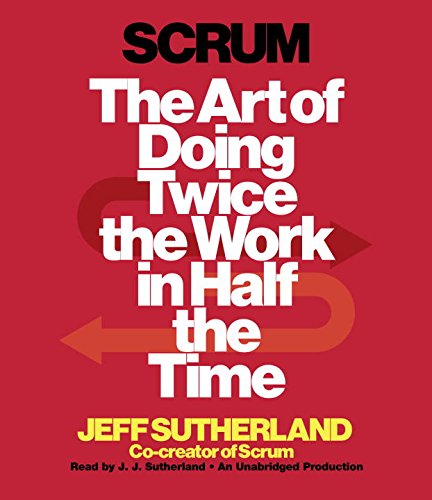
Scrum: The Art of Doing Twice the Work in Half the Time, by Jeff Sutherland

Scrum: The Art of Doing Twice the Work in Half the Time, by Jeff Sutherland


Scrum: The Art of Doing Twice the Work in Half the Time, by Jeff Sutherland

Ebook Download Scrum: The Art of Doing Twice the Work in Half the Time, by Jeff Sutherland

When you are hurried of work due date as well as have no suggestion to get inspiration, Scrum: The Art Of Doing Twice The Work In Half The Time, By Jeff Sutherland book is among your solutions to take. Book Scrum: The Art Of Doing Twice The Work In Half The Time, By Jeff Sutherland will certainly provide you the right source and also thing to obtain motivations. It is not only concerning the works for politic business, management, economics, and also various other. Some ordered works to make some fiction your jobs additionally need inspirations to overcome the job. As just what you need, this Scrum: The Art Of Doing Twice The Work In Half The Time, By Jeff Sutherland will possibly be your choice.

For everybody, if you intend to start joining with others to review a book, this Scrum: The Art Of Doing Twice The Work In Half The Time, By Jeff Sutherland is much suggested. And you should obtain the book Scrum: The Art Of Doing Twice The Work In Half The Time, By Jeff Sutherland below, in the web link download that we give. Why should be right here? If you desire various other sort of books, you will consistently locate them and also Scrum: The Art Of Doing Twice The Work In Half The Time, By Jeff Sutherland Economics, politics, social, scientific researches, religious beliefs, Fictions, and more publications are provided. These available books are in the soft files.

Why should soft documents? As this Scrum: The Art Of Doing Twice The Work In Half The Time, By Jeff Sutherland, many individuals likewise will certainly need to acquire guide sooner. But, often it's up until now means to obtain the book Scrum: The Art Of Doing Twice The Work In Half The Time, By Jeff Sutherland, even in various other country or city. So, to ease you in discovering guides Scrum: The Art Of Doing Twice The Work In Half The Time, By Jeff Sutherland that will support you, we aid you by offering the listings. It's not only the listing. We will certainly give the advised book Scrum: The Art Of Doing Twice The Work In Half The Time, By Jeff Sutherland web link that can be downloaded directly. So, it will certainly not need even more times and even days to pose it and other books.

Collect the book Scrum: The Art Of Doing Twice The Work In Half The Time, By Jeff Sutherland start from currently. However the extra means is by collecting the soft data of guide Scrum: The Art Of Doing Twice The Work In Half The Time, By Jeff Sutherland Taking the soft data can be saved or kept in computer or in your laptop computer. So, it can be more than a book Scrum: The Art Of Doing Twice The Work In Half The Time, By Jeff Sutherland that you have. The most convenient way to expose is that you can likewise save the soft file of Scrum: The Art Of Doing Twice The Work In Half The Time, By Jeff Sutherland in your suitable and also readily available gizmo. This problem will certainly expect you too often read Scrum: The Art Of Doing Twice The Work In Half The Time, By Jeff Sutherland in the leisures more than chatting or gossiping. It will not make you have bad habit, but it will lead you to have better routine to check out book Scrum: The Art Of Doing Twice The Work In Half The Time, By Jeff Sutherland.

Scrum: The Art of Doing Twice the Work in Half the Time, by Jeff Sutherland

We live in a world that is broken. For those who believe that there must be a more agile and efficient way for people to get things done, here from Scrum pioneer Jeff Sutherland is a brilliantly discursive, thought-provoking book about the leadership and management process that is changing the way we live.

In the future, historians may look back on human progress and draw a sharp line designating “before Scrum” and “after Scrum.” Scrum is that ground-breaking. �It already drives most of the world’s top technology companies. And now it’s starting to spread to every domain where leaders wrestle with complex projects.

If you’ve ever been startled by how fast the world is changing, Scrum is one of the reasons why. Productivity gains of as much as 1200% have been recorded, and there’s no more lucid – or compelling – explainer of Scrum and its bright promise than Jeff Sutherland, the man who put together the first Scrum team more than twenty years ago.

The thorny problem Jeff began tackling back then boils down to this: people are spectacularly bad at doing things with agility and efficiency. Best laid plans go up in smoke. Teams often work at cross purposes to each other. And when the pressure rises, unhappiness soars. Drawing on his experience as a West Point-educated fighter pilot, biometrics expert, early innovator of ATM technology, and V.P. of engineering or CTO at eleven different technology companies, Jeff began challenging those dysfunctional realities, looking �for solutions that would have global impact.

In this book you’ll journey to Scrum’s front lines where Jeff’s system of deep accountability, team interaction, and constant iterative improvement is, among other feats, bringing the FBI into the 21st century, perfecting the design of an affordable 140 mile per hour/100 mile per gallon car, helping NPR report fast-moving action in the Middle East, changing the way pharmacists interact with patients, reducing poverty in the Third World, and even helping people plan their weddings and accomplish weekend chores.�

Woven with insights from martial arts, judicial decision making, advanced aerial combat, robotics, and many other disciplines, Scrum is consistently riveting. But the most important reason to read this book is that it may just help you achieve what others consider unachievable – whether it be inventing a trailblazing technology, devising a new system of education, pioneering a way to feed the hungry, or, closer to home, a building a foundation for your family to thrive and prosper.


From the Hardcover edition.

  • Sales Rank: #63618 in Books
  • Published on: 2014-09-30
  • Released on: 2014-09-30
  • Formats: Audiobook, CD, Unabridged
  • Original language: English
  • Number of items: 6
  • Dimensions: 5.94" h x 1.12" w x 5.08" l,
  • Running time: 390 minutes
  • Binding: Audio CD
  • 6 pages

Review

"Full of engaging stories and real-world examples. The project management method known as Scrum may be the most widely deployed productivity tool among high-tech companies. On a mission to put this tool into the hands of the broader business world for the first time, Jeff Sutherland succeeds brilliantly.”
--Eric Ries, New York Times bestselling author of The Lean Startup

"Engaging, persuasive and extremely practical...Scrum provides a simple framework for solving what seem like intractable and complicated work problems.� It’s hard to make forward progress when you can’t see your impediments clearly. �Sutherland offers a lens to remedy that. Amazingly, this book will not only make your life at work and home easier, but also, better and happier."
--Shawn Achor, New York Times bestselling author of Before Happiness and The Happiness Advantage

"This book contains immense�practical value that could be transformative for�your company. If you have a project that requires people to accomplish, your first act should be to read and be guided by Scrum."
--Stephen Lundin, New York Times bestselling author of Fish: A Remarkable Way to Boost Morale and Improve Performance

“Scrum is mandatory reading for any leader, whether they’re leading troops on the battlefield or in the marketplace.� The challenges of today’s world don’t permit the luxury of slow, inefficient work.� Success requires tremendous speed, enormous productivity, and an unwavering commitment to achieving results.� In other words success requires Scrum.”
--General Barry McCaffrey

“Jeff Sutherland has written the essence of Scrum for the masses. In this easy-to-read book, which is filled with lively stories, apt metaphors, and illuminating quotes, Jeff has converted all the ‘tacit knowledge’ he has gained -- as a West Point cadet, fighter pilot in Vietnam, Aikido enthusiast, academic, technology expert, and father of Scrum -- into wisdom. This book elevates Scrum from a fix-it tool to a way of life.”
--Hirotaka Takeuchi, Professor of Management Practice, Harvard Business School

“Jeff Sutherland's book masterfully speaks truth to the political complexities that easily stand in the way of getting a lot of work done in the least amount of time. He lays out a doctrine of simplicity, showing -- with surprising insight -- how to categorize roadblocks, systematize solutions, choose action over prolonged study, and retain the important emotional aspects of work that ground meaningful interactions. The busy professionals who’ll likely be drawn to this book will find not only an effective manual for getting things done but, also, a how-to guide for living a meaningful life.”
--John Maeda, Design Partner, Kleiner Perkins Caufield & Byers

“This extraordinary book shows a new way to simplify your life and work, increase your focus, and get more done in less time than you ever thought possible.”
--Brian Tracy, bestselling author of Eat that Frog and Time Power

"I've used Scrum on projects big and small�throughout my software career with great success. It's the best�way I know�to manage small teams�and no doubt has applications beyond software. This book cuts through the jargon and pedagogy and gets to the essence of what makes it work."
--Adam Messinger,�Chief Technology�Officer, Twitter

�“Engaging…Sutherland tackles the problem of the perennially late, over-budget project—and actually shows how to solve it.��His fascinating examples of rescued projects will change the way you think and act."
--Dorothy Leonard and Walter Swap, authors of�Deep Smarts: How to Cultivate and Transfer Enduring Business Wisdom�

“Jeff Sutherland is the master of creating high-performing teams.� The subtitle of this book understates Scrum’s impact.�If you don’t get three times the results in one-third the time, you aren’t doing it right!”
--Scott Maxwell, Founder & Senior Managing Director, OpenView Venture Partners

“Jeff Sutherland used the common-sense but seldom-applied principles of the quality movement, user-centered design, and lean development to come up with a process that dramatically increases productivity while reducing employees’ frustrations with the typical corporate nonsense.� This book is the best description I’ve seen of how this process can work across many industries.� Senior leaders should not just read the book—they should do what Sutherland recommends.”�
--Jeffrey Pfeffer, Professor, Stanford Business School and c-author of The Knowing-Doing Gap

“Groundbreaking…Will upend people’s assumptions about how productive they can actually be…Here Jeff Sutherland discloses to the non-tech world the elegantly simple process that programmers and Web developers have been using since he invented Scrum, showing how a small, empowered, and dedicated team can deliver significantly higher quality work at a faster pace through introspection, iteration, and adaptation.”
--Michael Mangi, Senior V.P. of Interactive Technology, Social@Ogilvy

“As a warrior-citizen of the United States Army Reserve, co-founder of a software startup, and harried father of teens, I found myself instantly drawn to this eye-opening guide, which suggests how we can balance our vital roles with discipline and joyful diligence.�Sutherland’s secret to surmounting professional and personal obstacles is approaching tasks with deliberate attention and a resilient mindset.� This book will change the way you do everything.� Even better, it will help you feel good in the process.� Just read it, and get more done.”
-Arnold V. Strong, CEO of BrightNeighbor.com, and Colonel, US Army Reserve

"This deceptively simple system is the most powerful way I've seen to improve the effectiveness of any team. I started using it with my business and family halfway through reading the book."
-Leo Babauta, creator of Zen Habits


From the Hardcover edition.

About the Author
Jeff Sutherland is currently the CEO of Scrum, Inc. and Senior Adviser to OpenView Venture Partners where he coaches venture-funded companies.� One of the original signers of the Agile Manifesto and a father of the Scrum movement, he travels the world conducting training and speaking.� You can find him at www.scruminc.com.

Excerpt. � Reprinted by permission. All rights reserved.
CHAPTER ONE

The Way the World Works Is Broken

Jeff Johnson was pretty sure it wasn’t going to be a good day. On March 3, 2010, the Federal Bureau of Investigation killed its biggest and most ambitious modernization project--the one that was supposed to prevent another 9/11 but that had devolved into one of the biggest software debacles of all time. For more than a decade the FBI had been trying to update its computer system, and it looked as if they would fail. Again. And now it was his baby.

He’d shown up at the FBI seven months earlier, lured there by the new Chief Information Officer, Chad Fulgham, whom he’d worked with at Lehman Brothers. Jeff was Assistant Director of the IT Engineering Division. He had an office on the top floor of the J. Edgar Hoover Building in downtown Washington, D.C. It was a big office. It even had a view of the Washington Monument. Little did Jeff know he’d end up in a windowless cinder-block office in the basement for much of the next two years, trying to fix something that everyone believed to be unfixable.

“It was not an easy decision,” Jeff says. He and his boss had decided to declare defeat and kill a program that had already taken nearly a decade and cost hundreds of millions of dollars. By that point, it made more sense to bring the project in-house and do it themselves. “But it needed to be done and done well.”

The project was the long-awaited computer system that would bring the FBI into the modern age. In 2010--the era of Facebook, Twitter, Amazon, and Google--the FBI was still filing most of its reports on paper. The system the Bureau used was called the Automated Case Support system. It ran on gigantic mainframe computers that had been state of the art sometime in the eighties. Many special agents didn’t even use it. It was just too cumbersome and too slow in an era of terror attacks and swift-moving criminals.

When an FBI agent wanted to do something--anything, really--from paying an informant to pursuing a terrorist to filing a report on a bank robber, the process wasn’t that different from what it had been thirty years earlier. Johnson describes it this way: “You would write up a document in a word processor and print out three copies. One would be sent up the approval chain. One would be stored locally in case that one got lost. And with the third you’d take a red pen--I’m not kidding, a red pen--and circle the key words for input into the database. You’d index your own report.”

When a request was approved, that paper copy would drift down from upstairs with a number on it. A number written on a piece of paper is how the FBI kept track of all its case files. This method was so antiquated and porous that it was blamed in part for the Bureau’s failure to “connect the dots” that showed various Al Qaeda activists entering the country in the weeks and months before 9/11. One office was suspicious of one person. Another wondered why so many suspicious foreigners were getting flight training. Another had someone on a watch list but never told anyone else. No one in the Bureau ever put it all together.

The 9/11 Commission drilled down after the attack and tried to discover the core reason it was allowed to happen. Analysts, said the Commission, couldn’t get access to the very information they were supposed to analyze. “The poor state of the FBI’s information systems,” reads the report, “meant that such access depended in large part on an analyst’s personal relationships with individuals in the operational units or squads where the information resided.”

Before 9/11, the FBI had never completed an assessment of the overall terrorism threat to the United States. There were a lot of reasons for this, from focus on career advancement to a lack of information sharing. But the report singled out lack of technological sophistication as perhaps the key reason the Bureau failed so dramatically in the days leading up to 9/11. “The FBI’s information systems were woefully inadequate,” the Commission’s report concludes. “The FBI lacked the ability to know what it knew: there was no effective mechanism for capturing or sharing its institutional knowledge.”

When senators started asking the Bureau some uncomfortable questions, the FBI basically said, “Don’t worry, we have a modernization plan already in the works.” The plan was called the Virtual Case File (VCF) system, and it was supposed to change everything. Not letting any crisis go to waste, officials said they only needed another $70 million on top of the $100 million already budgeted for the plan. If you go back and read press reports on VCF at the time, you’ll notice that the words revolutionary and transformation are used liberally.

Three years later, the program was killed. It didn’t work. Not even a little bit. The FBI had spent $170 million in taxpayer money to buy a computer system that would never be used--not a single line of code, or application, or mouse click. The whole thing was an unmitigated disaster. And this wasn’t simply IBM or Microsoft making a mistake. People’s lives were, quite literally, on the line. As Senator Patrick Leahy of Vermont, then the ranking Democrat on the Senate Judiciary Committee, told the Washington Post at the time:


We had information that could have stopped 9/11. It was sitting there and was not acted upon. . . . I haven’t seen them correct the problems. . . . We might be in the 22nd century before we get the 21st-century technology.1


It is rather telling that many of the people who were at the FBI when the Virtual Case File disaster happened aren’t there anymore.

In 2005 the FBI announced a new program, Sentinel. This time it would work. This time they’d put in the right safeguards, the right budget procedures, the right controls. They’d learned their lesson. The price tag? A mere $451 million. And it would be fully operational by 2009.

What could possibly go wrong? In March of 2010 the answer landed on Jeff Johnson’s desk. Lockheed Martin, the contractor hired to make the Sentinel system, had already spent $405 million. They’d developed only half of the project, and it was already a year late. An independent analysis estimated it would take another six to eight years to finish the project, and the taxpayers would have to throw in at least another $350 million.

Finding some way around that was Johnson’s problem.

What went wrong and how the situation got fixed are why I’m writing this book. It wasn’t that these weren’t smart people. It wasn’t that the Bureau didn’t have the right personnel in place, or even the right technology. It wasn’t about a work ethic or the right supply of competitive juices.

It was because of the way people were working. The way most people work. The way we all think work has to be done, because that’s the way we were taught to do it.

When you hear what happened, it sounds at first as if it makes sense: the people at Lockheed sat down before they bid on the contract, looked at the requirements, and started planning how to build a system that would do all that. They had lots of intelligent people working for months, figuring out what needed to be done. Then they spent more months planning how to do it. They produced beautiful charts with everything that needed to be accomplished and the time it would take to complete each and every task. Then, with careful color selection, they showed each piece of the project cascading down to the next like a waterfall.

These charts are called Gantt charts, after Henry Gantt, who developed them. With the advent of personal computers in the 1980s making it easy to create these intricate charts--and to make them really complex--they have become works of art. Every single step in a project is laid out in detail. Every milestone. Every delivery date. These charts truly are impressive to behold. The only problem with them is that they are always, always wrong.

Henry Gantt invented his famous charts around 1910. They were first used in World War I by General William Crozier, who was the Chief of Ordnance for the US Army. Anyone who has studied that war knows that efficient organizational capability was not exactly a salient feature. Why a World War I artifact has become the de facto tool used in twenty-first-century project management has never been quite clear to me. We gave up on trench warfare, but somehow the ideas that organized it are still popular.

It’s just so tempting: all the work needed to be done on a massive project laid out for everyone to see. I’ve visited many companies that have people whose only job is to update that Gantt chart every day. The trouble is, once that beautifully elegant plan meets reality, it falls apart. But instead of scrapping the plan, or the way they think about the plan, managers instead hire people to make it look as if the plan is working. Essentially, they’re paying people to lie to them.

This unfortunate pattern echoes those reports the Soviet politburo was getting in the 1980s just before the total collapse of the USSR. A complete mirage. Now as then, the reports become more important than the reality they’re supposed to describe, and if there’s a discrepancy, reality is the problem, not the charts.

When I was a West Point cadet, I slept in Dwight Eisenhower’s old room. At night, the streetlights would reflect off a gold plate on the mantelpiece and sometimes wake me up. dwight d. eisenhower slept here, the plate read. And I’d remember that Eisenhower once observed that planning for combat is important, but as soon as the first shot is fired, your plans go up in smoke. At least he had enough sense not to use a Gantt chart.

So Lockheed presented the FBI with all these lovely charts, and the Bureau signed on. Supposedly, the task was now so well planned out that nothing could go wrong. “Look, it’s in the color-coded, time-stamped, bar-graphed plan.”

Yet when Jeff and his boss, CIO Chief Chad Fulgham, looked at the plan in the spring of 2010, they knew it for what it was, what such charts all are, really: a complete fabrication. When the two men started to look at actual development and actual deliverables, they realized the problem was beyond fixing. New defects in the software were being discovered faster than old ones were being fixed.

Chad told the Department of Justice Inspector General that they could complete the Sentinel project by bringing development in-house, cutting the number of developers, and that, by doing so, they’d deliver the most challenging half of the project in less than a fifth of the time with less than a tenth of the amount budgeted. The skepticism in the usually dry IG reports to Congress is palpable. In the October 2010 report, after laying out their nine points of concern with the proposal, the IG watchdogs conclude: “In sum, we have significant concerns and questions about the ability of this new approach to complete the Sentinel project within budget, in a timely fashion, and with similar functionality. . . .”2


A New Way of Thinking

This new approach is called “Scrum.” I created it twenty years ago. Now it is the only way proven to help projects like these. There are two ways of doing things: the old “Waterfall” method that wastes hundreds of millions of dollars and often doesn’t deliver anything, or the new way, which, with fewer people and in less time, can deliver more stuff with higher quality at lower cost. I know it sounds too good to be true, but the proof is in the results. It works.

Two decades ago I was desperate. I needed a new way of thinking about work. And through tons of research and experimentation and looking over past data I realized we all needed a new way of organizing human endeavor. None of it is rocket science; it’s all been talked about before. There are studies going back to World War II that lay out some of the better ways that people work. But for some reason people never really put together all the pieces. Over the past two decades I’ve tried to do just that, and now this methodology has become ubiquitous in the first field I applied it to, software development. At giants such as Google, Amazon, and Salesforce.com, and at small start-ups you haven’t heard of yet, this framework has radically shifted how people get things done.

The reason this framework works is simple. I looked at how people actually work, rather than how they say they work. I looked at research done over decades and at best practices in companies all over the world, and I looked deeply at the best teams within those companies. What made them superior? What made them different? Why do some teams achieve greatness and others mediocrity?

For reasons I’ll get into further in future chapters, I called this framework for team performance “Scrum.” The term comes from the game of rugby, and it refers to the way a team works together to move the ball down the field. Careful alignment, unity of purpose, and clarity of goal come together. It’s the perfect metaphor for what I want teams to do.

Traditionally, management wants two things on any project: control and predictability. This leads to vast numbers of documents and graphs and charts, just like at Lockheed. Months of effort go into planning every detail, so there will be no mistakes, no cost overruns, and things will be delivered on schedule.

The problem is that the rosy scenario never actually unfolds. All that effort poured into planning, trying to restrict change, trying to know the unknowable is wasted. Every project involves discovery of problems and bursts of inspiration. Trying to restrict a human endeavor of any scope to color-coded charts and graphs is foolish and doomed to failure. It’s not how people work, and it’s not how projects progress. It’s not how ideas reach fruition or how great things are made.

Instead, it leads to frustrated people not getting what they want. Projects are delayed, come in over budget, and, in too many cases, end in abject failure. This is especially true for teams involved in the creative work of crafting something new. Most of the time, management won’t learn of the glide path toward failure until millions of dollars and thousands of hours have been invested for naught.

Scrum asks why it takes so long and so much effort to do stuff, and why we’re so bad at figuring out how long and how much effort things will take. The cathedral at Chartres took fifty-seven years to build. It’s a safe bet that at the beginning of the project the stonemasons looked at the bishop and said, “Twenty years, max. Probably be done in fifteen.”

Most helpful customer reviews

46 of 49 people found the following review helpful.
Inspiration for Applying Scrum
By Steve Berczuk
The first thing to know is that this isn't a detailed guide to Scrum practices, though there is a summary of the key practices in an appendix. Since there are lots of guides to Scrum at the practices at varying levels of details, having more about what the practices are would not add a lot of value. This book does inform you about how scrum works by helping you to understand the value of Scrum through stories of Scrum in use in various domains, and not just software.. The book is full of war stories (both literally and figuratively), and Sutherland is clearly proud of how he, his family, and organizations he has worked with, have applied scrum. Reading this book will help energize you to use Scrum to help your team succeed. This is not the only book on Scum you need. But if you want motivation to explore more about Scrum, or if you have been practicing Scrum for a while and are looking for renewed inspiration, give this book a read.

6 of 6 people found the following review helpful.
Why Scrum?
By C. Eggert
Many Scrum books discuss the "how". This book focuses on the "why". I think it's very important to understand the "why" before trying to worry about the "how", so if you're new to Scrum and are thinking about diving straight into a book discussing the processes, I recommend taking a step back and reading something like this to understand where Scrum came from, what problems it is designed to solve, and how it is applicable to your situation, if at all.

It gets a little over-ambitious towards the end, and tends to view Scrum as a silver bullet, which it is not, but the discussion in the first half of the book is great.

3 of 3 people found the following review helpful.
Great book to get you excited about Scrum
By John Price
This is a great overview of Scrum and its power and simplicity when applied in the real world; not just in software teams but in charity work, government and education contexts. I've been a Scrum Master, developer, trainer, and coach for 10 years and I found it compelling. After reading some of the other Amazon reviews, I'd like to set some expectations for anyone thinking of reading it. What it isn't:

* A detailed Scrum manual for software teams. There's a short overview in the appendix, but this material is covered in plenty of other places, such as the Scrum Guide at (...), or the excellent Essential Scrum by Ken Rubin and the series of related Addison-Wesley books.
* A guide to troubleshooting Scrum or resolving common pitfalls in Scrum software teams. There's nothing here about handling unruly Product Owners, or whether SAFe is an appropriate extension for your company.

What it is:

* A fantastic, story-driven overview of how Scrum came to be, real-world situations where it has turned projects around, and why you should consider adopting it. If you are a C-level executive or other leader who wants to be "sold" on all this Scrum/agile/lean stuff you've heard about, read this. Note the endorsement by Eric Ries, author of The Lean Startup. The two books are good companions and written for a similar audience.
* For current Scrum practitioners, a fun read and refresher on why we're doing this thing called Scrum. It's easy to get lost in the day-to-day of backlog refinement, shipping increments and handling team impediments and forget about the spirit of the whole thing. Scrum is about getting out of the way of teams and letting them deliver above and beyond what's possible in command-and-control organizations.

Bottom line: This is a great companion book to others that explain Scrum in more detail, but it's more about the ideas behind it and the exciting possibilities it offers for people working on projects anywhere.

See all 296 customer reviews...

Scrum: The Art of Doing Twice the Work in Half the Time, by Jeff Sutherland PDF
Scrum: The Art of Doing Twice the Work in Half the Time, by Jeff Sutherland EPub
Scrum: The Art of Doing Twice the Work in Half the Time, by Jeff Sutherland Doc
Scrum: The Art of Doing Twice the Work in Half the Time, by Jeff Sutherland iBooks
Scrum: The Art of Doing Twice the Work in Half the Time, by Jeff Sutherland rtf
Scrum: The Art of Doing Twice the Work in Half the Time, by Jeff Sutherland Mobipocket
Scrum: The Art of Doing Twice the Work in Half the Time, by Jeff Sutherland Kindle

Scrum: The Art of Doing Twice the Work in Half the Time, by Jeff Sutherland PDF

Scrum: The Art of Doing Twice the Work in Half the Time, by Jeff Sutherland PDF

Scrum: The Art of Doing Twice the Work in Half the Time, by Jeff Sutherland PDF

Senin, 14 Maret 2011

[Y872.Ebook] Download PDF A History of National Socialism (RLE Responding to Fascism), by Konrad Heiden

Download PDF A History of National Socialism (RLE Responding to Fascism), by Konrad Heiden

Well, still puzzled of the best ways to get this e-book A History Of National Socialism (RLE Responding To Fascism), By Konrad Heiden right here without going outside? Simply connect your computer or gadget to the web and also begin downloading A History Of National Socialism (RLE Responding To Fascism), By Konrad Heiden Where? This page will certainly show you the web link web page to download A History Of National Socialism (RLE Responding To Fascism), By Konrad Heiden You never worry, your preferred e-book will be sooner all yours now. It will certainly be considerably simpler to take pleasure in reading A History Of National Socialism (RLE Responding To Fascism), By Konrad Heiden by on-line or getting the soft file on your gadget. It will no concern who you are as well as exactly what you are. This book A History Of National Socialism (RLE Responding To Fascism), By Konrad Heiden is created for public as well as you are among them which can take pleasure in reading of this publication A History Of National Socialism (RLE Responding To Fascism), By Konrad Heiden

A History of National Socialism (RLE Responding to Fascism), by Konrad Heiden

A History of National Socialism (RLE Responding to Fascism), by Konrad Heiden


A History of National Socialism (RLE Responding to Fascism), by Konrad Heiden

Download PDF A History of National Socialism (RLE Responding to Fascism), by Konrad Heiden

A History Of National Socialism (RLE Responding To Fascism), By Konrad Heiden How an easy suggestion by reading can enhance you to be an effective person? Reading A History Of National Socialism (RLE Responding To Fascism), By Konrad Heiden is an extremely basic activity. However, just how can lots of people be so careless to check out? They will prefer to spend their free time to chatting or hanging around. When as a matter of fact, reading A History Of National Socialism (RLE Responding To Fascism), By Konrad Heiden will provide you much more probabilities to be successful completed with the efforts.

When obtaining this e-book A History Of National Socialism (RLE Responding To Fascism), By Konrad Heiden as referral to review, you can gain not simply motivation however likewise new knowledge and also driving lessons. It has greater than common advantages to take. What type of e-book that you read it will be beneficial for you? So, why need to obtain this publication entitled A History Of National Socialism (RLE Responding To Fascism), By Konrad Heiden in this write-up? As in web link download, you could obtain the book A History Of National Socialism (RLE Responding To Fascism), By Konrad Heiden by online.

When getting guide A History Of National Socialism (RLE Responding To Fascism), By Konrad Heiden by on-line, you could read them wherever you are. Yeah, even you are in the train, bus, waiting checklist, or other locations, online e-book A History Of National Socialism (RLE Responding To Fascism), By Konrad Heiden could be your good close friend. Every single time is a great time to check out. It will enhance your understanding, enjoyable, amusing, driving lesson, as well as experience without investing even more cash. This is why online book A History Of National Socialism (RLE Responding To Fascism), By Konrad Heiden comes to be most really wanted.

Be the very first which are reading this A History Of National Socialism (RLE Responding To Fascism), By Konrad Heiden Based upon some factors, reading this publication will supply more benefits. Also you need to read it detailed, page by web page, you can finish it whenever as well as wherever you have time. When much more, this on-line publication A History Of National Socialism (RLE Responding To Fascism), By Konrad Heiden will give you easy of reading time and also activity. It also offers the encounter that is inexpensive to get to and also get substantially for far better life.

A History of National Socialism (RLE Responding to Fascism), by Konrad Heiden

Konrad Heiden was an influential journalist and historian of the Weimar Republic and Nazi Eras. He became an early critic of National Socialism after attending a party meeting in 1920. First published in English in 1934, A History of National Socialism provides a detailed account of the growth of the movement through the 1920’s until its assumption of full control of Germany in 1934. It argues that Nazi ideology was extremely pragmatic and able to accommodate a wide diversity of opinion in return for the unconditional support of Hitler as leader.

  • Sales Rank: #1589811 in Books
  • Brand: Brand: Routledge
  • Published on: 2013-04-14
  • Released on: 2013-04-15
  • Original language: English
  • Number of items: 1
  • Dimensions: 9.21" h x 1.05" w x 6.14" l, 1.55 pounds
  • Binding: Paperback
  • 464 pages
Features
  • Used Book in Good Condition

About the Author
Konrad Heiden was a journalist and historian of the Weimar Republic and Nazi eras, most noted for "The F hrer" the first influential biography of Adolf Hitler. He died in 1966.

Most helpful customer reviews

2 of 2 people found the following review helpful.
This is a valuable text because of its proximity to the events and its ability to communicate the qualia of the time.
By Peter S. Bradley
A History of National Socialism by Konrad Heiden

This book was written in 1934; its final chapters bring the reader up to the Rohm purge. I stumbled onto this book via a footnote in another book. I had not heard of Heiden previously. I had never heard of this book. I am, again, surprised, that books like this disappear from sight, while fraudulent polemics like Cornwell’s Hitler’s Pope inform the zeitgeist. This review is going to feature what I found interesting or surprising. Since my main interest is the Catholic versus Nazi struggle, that will be a particular focus.

Heiden was born in 1901. He was a Social Democrat journalist. He left Germany in 1932. In short, he was well-situated to watch the rise of Hitler and National Socialism in Germany. Heiden was also an opponent of Hitler, and his dislike for Hitler is apparent, but nonetheless this is an insightful book that provides historical information rather than moralizing, which is a refreshing change from modern books. Because Heiden was on the spot, distance and events have not caused details to blur. Heiden is also an elegant prose stylist; some of his observations are memorable (e.g., “The devil who undoubtedly possessed Pohner was a cold devil.” (p. 25.); Regarding Goebbels - “It has always been his advantageous, if not altogether creditable, fate to be the third person at a fight between two others, and to attach himself timely to the stronger.”)

Heiden begins with Anton Drexler, the locksmith who founded the NSDAP, at that time called the German Workers Party. Drexler hated Marxism and capitalism and founded his party on the idea of German Socialism, what Left Wing Socialists called “Kaiser’s Socialists.” (p. 4.) Drexler was swept away by Hitler in 1921, remained as a Bavarian Parliament until 1928, when he disappeared from politics. (p. 7.) The early party included Ernst Rohm and Dietrich Eckart and Gottfried Feder. Heiden’s position throughout the book is that Rohm was the key to the success of the NSDAP because he brought in manpower and muscle to the NSDAP through his connections with the military and Freikorps. (p. 39.) Feder was an engineer who brought in scientific notions. Eckart was a writer and publisher. The NSDAP started as a “Party of the Left” in 1919, according to Heiden. (p. 10.) Nazi anti-capitalism would remain until the end of the Weimar Republic. (p. 206.)

In 1918, Hitler professed himself to be a “Majority Socialist,” which may have been a Party of the Right. (p. 11.) After hearing Feder lecture, Hitler became interested in the NSDAP and became Party Member Number 7 in the “inner party” but “not in the party itself which was somewhat larger.” (p. 12.) Hitler gave his first speech, which must have contained anti-Semitism, because a warning was issued against “noisy anti-Semitism” since the “youthful Party still felt itself to be a Party of the Left.” (p. 13.) Hitler and the Nazis downplayed their anti-Semitism in their quest for power in the 1930s to such an extent that Heiden could wonder:

“There is reason to believe that Hitler – a great orator now and Chancellor – has not really given up his belief in Judaism as a personification of evil.” (p. 69.)

Heiden points out that “as late as 1925,” Hitler was still vouching for the validity of the Protocols of the Elders of Zion. (p. 69.) The sense of this sentence – written in 1934 – is that there is some question about how “recently” – 7 years before – Hitler had been an uncouth anti-Semite. From our perspective our reaction is to be surprised at Heiden’s ignorance. Likewise, after a flurry of anti-Semitic shop smashing in 1930, the culprits were expelled from the Party and the Volkischer Beobachter predicted that the shop windows of Jewish business would be better looked after in “the Third Reich.” (p. 155.)

Heiden notes the following:

“Among German Jews there was a widespread belief that influential leaders of the National Socialist Party no longer really took anti-Semitism seriously; or that at all events they would not seek to realize the anti-Semitic demands in their programme. This was one of the numerous mistakes which foreign critics of National Socialism made. With the growth of National Socialism during the last few years an anti-Semitism that was domant in the broad masses of the German people, and that manifested itself very often in a not unfriendly reserve, revived again to strong and aggressive life. As early as the summer of 1932 the life of Jews in the country and smaller towns had in certain districts become unpleasant. Systematic boycotting, social outlawry, and even physical ill-treatment were frequent, especially in eastern Germany and northern Bavaria. Even in the streets of Berlin Jewish passers-by were continually being attacked. From this temper a systematic persecution of Jews arose a few weeks after Hitler’s taking offense.” (p. 336.)

Nonetheless, the Nazis realized that unremittent persecution would endanger their foreign policy; hence the boycott of Jewish stores on April 1, 1933 was a one day affair, mostly to appease his followers. (p. 337.)

Heiden discusses the 25 point program of the NSDAP, which endured through 1934, but points out that it is a product of its time, basically post-World War I, with inclusion of socialist principles that were never implemented, such as the abolition of unearned income, the abolition of interest and the nationalization of large stores. The NSDAP was refounded in 1926, and although the program remained, the later movement had “little connexion with the old lower middle-class programme.” (p. 18.)

The NSDA was anti-Semitic from the beginning. (p. 26.) Heiden argues that Hitler learned from Rudolf Junge that Luther’s reformation was “only superficial, because it did not separate Christianity from the Old Testament ; that the Western cult of Mammon and Eastern Bolshevism were only apparent opposites, but were in reality allies for setting up a Jewish World Empire” and that international democracy was a political outcome of the Jewish spirit. (p. 29.) Jung also pointed to the enemies of the German state in the fact that Germany had the strongest social democratic party and the strongest clerical party. (p. 29.)

Heiden provides a character sketch of Hitler. Hitler was assiduous as an agitator. He did not tire of the adulation of the masses who had failed to achieve recognition and for whom such adulation was an end in itself and not a questionable political expedient. (p. 34.) Heiden believes that Hitler was clever and intelligent. (See p. 37.) Hitler spoke in slogans which delighted the crowd “at hearing the speaker express its own opinions.” (p. 34.) In addition, the Nazis organized their own approach to “public discourse” by having shock troops who would howl down anyone who wanted to start a discussion, which has an eerie resonance to the political climate of 2016. Hitler regarded the gains to his Party as more important than the damage to the community at large; he subordinated the precepts of law and order to the advantage of his party. (p. 37.) By 1920, the Nazis owned a newspaper, The Volkischer Beobachter, and had 3,000 members. (p. 39.)

Ludendorf was in Munich by 1921 where Hitler came to know him personally. (p. 40, 44.) Rosenberg formulated Nazi foreign policy with a plan for a German crusade to Russa. (p. 41.) Heiden observes of Rosenberg: “There are probably few people in Germany to-day who systematize and dogmatize in politics as inexorably as Rosenberg, or who are so capable in an ungovernable fury of construction of basing a detailed fabric of conclusions on nothing at all. Rosenberg’s schemes for foreign policy consist of tremendous compendiums for the archives, and of plans that are not carried out.” (p. 41.) But so it always is with tiny fringe political movement.

Heiden suggests that Rosenberg and other White Russians injected the Russian form of anti-Semitism into the German party:

“The gloomy bloodthirsty Russian anti-Semitism infected the quieter German type. Merejkowski preached horror of the Bolshevist Antichrist; the protocols of the Wise Men of Zion were eagerly read in Germany. The old Russian anti-Semitism was the obvious instrument for the anti-Bolshivism of the White Russian emigres. Now, in an altogether false connexion it came the vehicle for the ideas on foreign policy of the German National Socialists. Regarded from the German point of view, the Jewish question is the same as it always was – the anti-Semitism of Hitler and his Baltic friends is not German. It is the companion piece to Ahasuerus – the eternal anti-Semite roaming the earth in pursuit of the Wandering Jew.” (p. 42.)

Heiden covers the transformation of Hitler into the Leader. He had already been dubbed the Leader, but there were factions in the NSDAP who looked for the opportunity to unseat Hitler. Julius Streicher played a role in the episode which gave Hitler the opportunity to present an ultimatum to the Party and to take total control. (p. 47 – 49.) Heiden points out that member Number 7 managed to make his department – propaganda – into the only department that matter. (p. 50.) The NSDAP was effectively the appendage of a propaganda department.

Heiden provides an extensive section on Hitler’s biography, which ought to be read. Heiden has the advantage of proximity to witnesses and events, albeit this was written during the period of hero-worship. On the other hand, there is this:

“At the time of the German Revolution, Hitler was in hospital at Pasewalk. He was now twenty-nine years old and a man of many talents and many shortcomings. He paid a great price for his advantages; he was less mature than the average man of his age; and while he had perhaps read and pondered more deeply than many, he was seriously lacking in ordinary common sense and in an understanding and sympathy for other people’s points of views. His regimental comrades looked on him as not quite normal and he had no friends.”(p. 58.)

According to Heiden, Hitler was “half-educated” but had an amazing memory sored in his brain culled from reading which had been digested. (p. 60.) Hitler was not “strong” – witnesses testified to his outbursts and stuttering. (p. 62.) “He is not a will-man but a brain man, and, it must be admitted, a notable one.” (p. 62.) “His utterly logical way of thought is Hitler’s strength.” (p. 63.) Heiden surprisingly compliments Hitler’s logic, which enabled him to see the conclusions that followed from his principles sooner and more clearly than others. Equally surprising is that Heiden writes that Hitler was easily cowed by stronger personalities. (p. 70.) (Hitler was also vain: he had a small pointed military beard in the first post-War years. (p. 75.)

The Nazi “struggles with the Church” began early. (p. 99.) Dietrich Eckart wrote in the Volkischer Beobachter in 1921: “Tear in pieces that lascivious bible of Satanism – the Old Testament.” (p. 99.)

Catholicism opposed the NSDAP from the beginning because of its Nationalism:

“For the Nazis, the Cardinal Archbishop of Munich, Dr. von Falhaber, constituted a rock of offence from the very beginning. In appearance and thought the Cardinal is a true Prince of the Church. As an intellect, he may have been inferior to the present Cardinal Secretary of State, Pacelli, who was then Papal Nuncio in Munich. But as a coiner of political phrases Cardinal Faulhaber has no equal in the choice of word, place, and time of delivery. The Cardinal was a convinced monarchist and an enemy of the Revolution. At the same time he was as a Catholic the enemy of Nationalism and a Bavarian wearer of the purple possessed simultaneously of a world-embracing and patriotic ultramontanism. It was not long before the Nazis made this discovery. It was the Cardinal who invented a phrase that is still in current use: The Revolution was perjury and high treason. Ata Catholic Congress in Munich in August 1922, Cardinal Faulhaber attacked the “lies” contained in the “Jewish Press.” While the Bavarian and patriotic Right Wing associations made use of these phrases in their propaganda, the Nazis were troubled in their consciences by other words that the Cardinal let fall on the same occasions. As a defender of the “Roman” peace, the Cardinal protested against military festivals, condemned political murders, and placed the responsibility for their occurrence at the door of the agitatist activity carried on in the radical Right Wing newspapers. This was in effect a direct attack upon the Nazis.” (p. 100.)

Hitler conspired with Ludendorff in the Munich Putsch which failed because of a lack of courage and preparation. After the Putsch, Hitler broke with Ludendorff, and the military broke with party, and, while Hitler was in prison, the Nazis captured 23 seats in the Reichstag. (p. 1016 -108.) The failure of the Putsch was therefore a blessing in disguise.

With the Rohm purge fresh in 1934, Heiden points out that Rohm and Hitler were associated with political murders throughout their career. (p. 110.) Neither placed any value on human life. (Id.) Heiden is prophetic: “Nevertheless nation and State alike can only regain their lost morality when this generation which has been sacrificed in its guilty lays down the leadership.” (p. 111.) In August of 1932, five Nazis were arrested for the murder of a workman named Pietrzuch. (p. 198.) Hitler swore “Niblung loyalty” to the Nazis, who were eventually pardoned after 1933. (p. 199.)

Heiden offers character portraits of Hitler’s lieutenants. Goebbels gets a lengthy treatment and is described as lacking “Hitler’s logical mind.” (p. 118.) Goebbels was a supporter of Ludendorff. (p. 119.) Goebbels “excels Hitler himself in his lack of acquired knowledge. His writings and speeches are the richest in ideas and the poorest in solid thought in the whole literature of National Socialism. At least, Hitler has acquired knowledge of a special subject – foreign policy. There is not a trace of any real and fundamental knowledge to be found in Goebbels.” (p. 120.) Strangely, Heiden views Goebbels as “rather” a philo-Semite gone wrong than a true anti-Semite, which Goebbels compensated for by indulging in overly-extreme anti-Semitism. (p. 265-266.)

Heiden provides a very interesting discussion on the machinations of the SA, which was often close to becoming a power in its right, and Hitler, as well as the political machinations as Hitler collected political power.

Catholic opposition to the NSDAP continued to the end of the Weimar Republic:

“Among all the powers who were at that time occupying commanding positions in German politics, the Catholic Church must receive special mention on account of its curious attitude towards National Socialism. The Church was offended by the dogma and doctrines of the Nazi Party. Its censure was directed at Point 24 of the programme, which contained the religious confession of the Party and introduced mention of the ethics and moral sense of the Teutonic race. The disposition of the Church, however, is to be tolerant in racial questions. Point 24 alone would probably not have proved the occasion for a quarrel had not Alfred Rosenberg, the theorist of the Party, written various articles containing statements that were dogmatically questionable. It is true that Rosenberg’s articles were several times expressly stated not to be semi-official Party utterances, but that did not help matters. In March 1931 all the German Bishops issued strongly worded protests against National Socialism. The Bishops of the Diocese of Paderborn declared expressly that “membership of the National Socialist Party was not permissible for a Catholic Christian for so long and in so far as it propagates political and educational theories that are irreconcilable with the Catholic doctrine. The Bavarian Bishops said that what National Socialism called Christianity was no longer the Christianity of Christ. The Bishop of Mainz in Septmeber 1931 denied Peter Gemeinder, a National Socialist town councilor, Christian burial because “no Catholic may be a professed member of the National Socialist Party.” (p. 152 – 153.)

This Catholic antipathy led Catholics to support Hindenburg against Hitler in the 1932 presidential elections:

“All traditional affinities were torn asunder in this extraordinary contest. Behind the Protestant Hindenburg stood the majority of Catholic voters, whose Ministers had recently been obliged to retire before Protestant suspicions. Behind the Catholic Hitler appeared the upper classes of Protestant Noth Germany. And Hugenberg tried vainly to put a spoke in the Austrian’s wheel by denouncing him publicly as a “Roman Catholic.” In addition to the Centre, the Social Democrat working class supported the imperial Field-Marshal von Hindenberg with tremendous zest, while the Conservative Agrarian Party largely went with the revolutionary Hitler. “ (p. 168.)

Another datum that might surprise modern readers is that Communists were “obeying a strange order that Hitler’s seizure of power must actually be encouraged, because the path to Communism must go by way of the rule of Fascism and its collapse.” (p. 154.) Hence the Communist Party was attacking the Social Democrats, not the National Socialists, right up to the end. (Id.) Another supporter of the Nazis was the Prussian Crown Prince August Wilhelm of Prussia, who appeared in a brown shirt and was attacked by the police with truncheons. (p. 57.)

Heiden provides information about the Stahlhelm. The Stahlhelm was a fighting force of veterans that began to play a political role in the late Weimar Republic. Their leader – Hugenberg – was part of the coalition that put the Nazis into power, then marginalized and the Stalhelm was violently incorporated into the SA. (p. 285.)

Another quasi-military association that we forget is the Reichsbanner Schwarz-Rot-Gold that was pro-Republican and formed in 1934 to as a republican counterpoise to the military associations of the Right. It was large on paper but not very effective. (p. 175.)

The final days of the Weimar Republic were an ineffective mess. Bruning was put in as Chancellor with the permission of Hindenburg to rule through executive decrees. Schleicher undermined Bruning and Papen replaced Bruning. The conniving Papen was ousted by Schleicher, who was no more effective. Papen proposed bringing the Nazis into the coalition. Hitler was not opposed to coalitions: Mussolini had at first ruled as a chief of a collation. But Hitler was not going to be made Vice Chancellor. (p. 195.) Ludwig Muller – future Reichsbishop – induced von Blomberg to bring the army into the coalition. (p. 230.)

Of course, Hitler used the Reichstag fire to obtain emergency powers. Writing in 1934, Heiden was firmly convinced that the fire was a Nazi set-up, with speculation about the arsonist being placed on Goebbels or Goring. (p. 248.) It was used to attack not only Communists, but also to implicate “their Social Democrats allies”, although the Communists had been attacking the SDs not the Nazis. (p. 245.) Hitler apparently truly believed that there was going to be a Communist insurrection and thought that this was the signal. Heiden also notes the Nazi obsession with tidily liquidating witnesses, e.g., Hanussen, Bell, which becomes important in the Rohm purge. (p. 250 – 251.) The Communist Reichstag members and many SDs were taken into “protective custody” by Goring as Prussian police chief. (p. 254.)

Bavaria was the last place of possible resistance, but it was hindered by the fact that the younger generation was more attached to the Reich than their fathers and that northern Bavaria was “to a great extent Protestant” and would certainly not join in any secession.” (p. 260.) In any event, the Nazis staged a coup in Bavaria and arrested the opposition.

Hitler obtained passage of the Enabling Acts by threatening and promising the Center Party. Hitler promsed Kaas that the Center would be part of a smaller executive committee, which promise Hitler broke, and that the rights of the Churches would be protected by treaty. (p. 271.) Hitler ignored the SD which voted against the Enabling Act in the Reichstag in a show of bravery. (p. 271.) The threat was obvious, and on June 22, 1933, the SA fell upon the Catholic Bavarian People’s Party and arrested their leadership, including priests, which led to the decision of the BPP and the Center to dissolve. (p. 284.) (Something which is missing from Cornwell’s thesis, as if setting the agenda was under the control of the Catholic parties.)

Heiden provides a chapter on “Cross against Swastika” (Chapter XV, p. 327.)

Heiden observes that Hitler had the “unique moral capacity” to make promises as Chancellor tht he need not keep as Party Leader. (p. 327.) “In any case an attentive ear must have heard that Hitler only valued the Churches in a very limited sense – as assistants in the preservation of nationality.” (p. 328.) Swastika flags were run up on Protestant Churches. (p. 329.)

Catholicism was more equivocal. “National Socialism as a fighting creed had one been dogmatically outlawed by the Catholic bishops.” (p. 332.) The Catholic Chancellor, Hitler, and Goebbels, took revenge by not attending the Catholic service. (p. 332.) Even after the taking of power, the Catholic Church “did not cease to protest against the excesses of the SA and against the cruelty displayed during the first months of the new regime. On June 10 the Bishops published a joint pastoral letter in which they declared “that national unity is brought into being, not only by identity of blood but also by identity of disposition, and that when it is a question of membership of a nation exclusive recognition of race and blood must lead to injustice.” (p. 332.) The Nazis responded by attacking the members of the Catholic Journeyman’s Association. (p. 332.) The Concordat was negotiated; the Church obtained nothing she did not already possess; the Concordat was ratified “only after much hesitation.” (p. 334.)

In the chapter on “An Anticipation of the Future” (chapter XVI), Heiden suggests that the eminence grise of Nazism was Gregor mendel and “the founder of the science of eugenics, Sir Francis Galton.” (p. 344.) “Hence National Socialism combines eugenics with a racial theory which originated with the Jewish sociologist Gumplowicz in Graz: the theory that nations are brought into existence by the domination of a higher over a lower race. This theory was given popular expression in Hitler’s great valedictory address to the Party Congress in Nuremberg on September 2.”

Heiden details the extent of lawless State murder in the first year of Hitler’s rule. P. 362 – 364.) He predicts an invasion of the east.

Heiden concludes with the Rohm purge. Hitler was informed that an SA coup was in the offing. Rohm had made himself unpalatable in his homosexuality and in surrounding himself with homosexuals. The true reason, according to Heiden, may have been the fear of a conspiracy between Rohm and Schleicher and the possession of information that Schleicher could be used against Hitler. The murder of the Catholics, Klausener, etc. may have been a warning to Papen by Goring. In addition, Heiden argues that Klausener was in possession of information that “was uncomfortable for Goring and Hitler.” (p. 424.)

Again, this is a valuable book because of its proximity to the events and its ability to communicate the qualia of the time as a lived experience.

See all 1 customer reviews...

A History of National Socialism (RLE Responding to Fascism), by Konrad Heiden PDF
A History of National Socialism (RLE Responding to Fascism), by Konrad Heiden EPub
A History of National Socialism (RLE Responding to Fascism), by Konrad Heiden Doc
A History of National Socialism (RLE Responding to Fascism), by Konrad Heiden iBooks
A History of National Socialism (RLE Responding to Fascism), by Konrad Heiden rtf
A History of National Socialism (RLE Responding to Fascism), by Konrad Heiden Mobipocket
A History of National Socialism (RLE Responding to Fascism), by Konrad Heiden Kindle

A History of National Socialism (RLE Responding to Fascism), by Konrad Heiden PDF

A History of National Socialism (RLE Responding to Fascism), by Konrad Heiden PDF

A History of National Socialism (RLE Responding to Fascism), by Konrad Heiden PDF

Minggu, 13 Maret 2011

[G799.Ebook] PDF Ebook Merlin's Guide to the Merlin - 10 Fun Songs for the Seagull Merlin: The First Seagull Merlin Songbook on Amazon (Merlin's Guide to the Seag

PDF Ebook Merlin's Guide to the Merlin - 10 Fun Songs for the Seagull Merlin: The First Seagull Merlin Songbook on Amazon (Merlin's Guide to the Seag

As one of the book compilations to recommend, this Merlin's Guide To The Merlin - 10 Fun Songs For The Seagull Merlin: The First Seagull Merlin Songbook On Amazon (Merlin's Guide To The Seag has some solid factors for you to check out. This book is extremely ideal with exactly what you require now. Besides, you will also like this publication Merlin's Guide To The Merlin - 10 Fun Songs For The Seagull Merlin: The First Seagull Merlin Songbook On Amazon (Merlin's Guide To The Seag to check out considering that this is one of your referred books to review. When going to get something new based on encounter, amusement, and various other lesson, you can use this publication Merlin's Guide To The Merlin - 10 Fun Songs For The Seagull Merlin: The First Seagull Merlin Songbook On Amazon (Merlin's Guide To The Seag as the bridge. Beginning to have reading habit can be gone through from various ways and from alternative kinds of publications

Merlin's Guide to the Merlin - 10 Fun Songs for the Seagull Merlin: The First Seagull Merlin Songbook on Amazon (Merlin's Guide to the Seag

Merlin's Guide to the Merlin - 10 Fun Songs for the Seagull Merlin: The First Seagull Merlin Songbook on Amazon (Merlin's Guide to the Seag


Merlin's Guide to the Merlin - 10 Fun Songs for the Seagull Merlin: The First Seagull Merlin Songbook on Amazon (Merlin's Guide to the Seag

PDF Ebook Merlin's Guide to the Merlin - 10 Fun Songs for the Seagull Merlin: The First Seagull Merlin Songbook on Amazon (Merlin's Guide to the Seag

Merlin's Guide To The Merlin - 10 Fun Songs For The Seagull Merlin: The First Seagull Merlin Songbook On Amazon (Merlin's Guide To The Seag. In what case do you like checking out so a lot? Exactly what about the kind of the publication Merlin's Guide To The Merlin - 10 Fun Songs For The Seagull Merlin: The First Seagull Merlin Songbook On Amazon (Merlin's Guide To The Seag The have to review? Well, everyone has their own reason must review some e-books Merlin's Guide To The Merlin - 10 Fun Songs For The Seagull Merlin: The First Seagull Merlin Songbook On Amazon (Merlin's Guide To The Seag Mainly, it will certainly associate to their need to obtain expertise from the e-book Merlin's Guide To The Merlin - 10 Fun Songs For The Seagull Merlin: The First Seagull Merlin Songbook On Amazon (Merlin's Guide To The Seag and also intend to review merely to obtain amusement. Novels, tale e-book, as well as various other entertaining publications end up being so prominent now. Besides, the scientific books will additionally be the most effective factor to pick, particularly for the pupils, teachers, physicians, businessman, as well as various other careers which are fond of reading.

When getting this publication Merlin's Guide To The Merlin - 10 Fun Songs For The Seagull Merlin: The First Seagull Merlin Songbook On Amazon (Merlin's Guide To The Seag as reference to check out, you could get not only inspiration however additionally brand-new expertise and also driving lessons. It has even more compared to typical advantages to take. What type of book that you review it will serve for you? So, why should obtain this publication qualified Merlin's Guide To The Merlin - 10 Fun Songs For The Seagull Merlin: The First Seagull Merlin Songbook On Amazon (Merlin's Guide To The Seag in this post? As in web link download, you can obtain guide Merlin's Guide To The Merlin - 10 Fun Songs For The Seagull Merlin: The First Seagull Merlin Songbook On Amazon (Merlin's Guide To The Seag by on-line.

When obtaining guide Merlin's Guide To The Merlin - 10 Fun Songs For The Seagull Merlin: The First Seagull Merlin Songbook On Amazon (Merlin's Guide To The Seag by online, you can review them anywhere you are. Yeah, also you remain in the train, bus, waiting checklist, or various other locations, on the internet book Merlin's Guide To The Merlin - 10 Fun Songs For The Seagull Merlin: The First Seagull Merlin Songbook On Amazon (Merlin's Guide To The Seag could be your excellent friend. Whenever is a great time to review. It will certainly enhance your knowledge, fun, amusing, lesson, as well as experience without investing more cash. This is why online publication Merlin's Guide To The Merlin - 10 Fun Songs For The Seagull Merlin: The First Seagull Merlin Songbook On Amazon (Merlin's Guide To The Seag ends up being most really wanted.

Be the initial that are reviewing this Merlin's Guide To The Merlin - 10 Fun Songs For The Seagull Merlin: The First Seagull Merlin Songbook On Amazon (Merlin's Guide To The Seag Based on some reasons, reading this e-book will certainly offer even more benefits. Even you have to review it detailed, page by page, you can finish it whenever and also anywhere you have time. Again, this on the internet publication Merlin's Guide To The Merlin - 10 Fun Songs For The Seagull Merlin: The First Seagull Merlin Songbook On Amazon (Merlin's Guide To The Seag will certainly offer you simple of reviewing time and also activity. It likewise supplies the experience that is affordable to reach and also get greatly for much better life.

Merlin's Guide to the Merlin - 10 Fun Songs for the Seagull Merlin: The First Seagull Merlin Songbook on Amazon (Merlin's Guide to the Seag

Merlin’s Guide to the Merlin: Ten Fun Songs for the Seagull Merlin Contents: -Amazing Grace -Arkansas Traveler -Aura Lee -Blackberry Blossom -The Devil’s Dream -Fisher’s Hornpipe -Go to the Devil and Shake Yourself -Minuet in G (in D) -Ode to Joy -Swallowtail Jig Merlin’s Guide to the Merlin: Ten Fun Songs for Seagull Merlin is a unique learning resource that promises a deeper understanding and love of music. The beautiful sound of the Merlin instantly induces a state of relaxation. These songs have been chosen to foster a richer knowledge of music theory. Both sheet music and tablature are provided to support beginners. The songs are transcribed and transposed into Merlin friendly keys and voicing. You will also be happy to find a chart of common seagull merlin chords and a detailed diagram of the notes on the neck. Merlin’s Guide to the Merlin: Ten Fun Songs for Seagull Merlin provides a variety of styles rarely found in songbooks. From this collection of songs you will learn Classical, Bluegrass, Celtic, Old Time Fiddle Tunes, Gospel, and Folk Tunes. A Seagull Merlin Player who can master the contents of this book will see improvement in their understanding of performance, music theory, composition, and improvisation. The value of knowledge is immeasurable. These arrangements will expose you to different time signatures, keys, chords, and rhythms. We have also included information about each song's history. Whether you are a professional jammer, or this is your first time learning an instrument, this song collection will help you improve as a musician. Beyond the pages of this book Merlin's Guide to the Merlin offer a rich suite of online tools. Use the embedded links or visit our website to hear audio examples, view videos, and interact with us to create the ideal Seagull Merlin resources that you would like to see in the future. Never before has music, relaxation, and learning coexisted so congruently in one e-book. We promise that you will get hours of enjoyment and possibly fame and fortune by purchasing Merlin's Guide to the Merlin: Ten Fun Songs for the Seagull Merlin. We hope you enjoy Merlin’s Guide to the Merlin: Ten Fun Songs for Seagull Merlin as much as we do!

  • Sales Rank: #216415 in Books
  • Published on: 2015-03-18
  • Original language: English
  • Number of items: 1
  • Dimensions: 11.00" h x .6" w x 8.50" l, .19 pounds
  • Binding: Paperback
  • 26 pages

About the Author
Nearly 4 decades of experience with a passion bordering on obsession for music

Most helpful customer reviews

4 of 4 people found the following review helpful.
Long live merlin!
By tim land
I just got my Merlin 2 months ago and getting this book was just what i needed to learn to play songs on it. I only wish there were more. Let me know when there are more to be had and I will be first in line to buy it!

2 of 2 people found the following review helpful.
Don't Be Fooled...
By armagecko
...by the cute cartoon on the cover. This book is garbage created to make a quick $8. I can't remember ever giving any product a 1 star rating, but I'd give this book a zero if I could. I recently purchased a Seagull Merlin and thought I'd see what other melodies folks had transcribed for this new (to me) instrument. The book that arrived hardly looked new as it already had several creases in the cover. Probably a prior purchase returned. It's only 13 pages long and 5 of those pages are blanks, dedications, a fuzzy neck diagram & TOC. There are no lyrics in the book, only melodies. So, anyone hoping to sing along to your Merlin riffs will need to look online for lyrics. The book contains diagrams for 8 chords (Yep. 8.) but only 4 of the 10 songs include chord charts; the other 6 are melody notes only. Also, for a book of less than 500 words (VERY brief song descriptions), this tripe is full of ridiculous typos. If the English language is such a bother for the author, who knows what kind of musical mistakes are included! The titles of the songs and the tablature are fuzzy, indicating that the songs were lazily copied from another source or maybe typeset with a DOS program(!). Honestly, I'm insulted that something this shoddy ever saw print. With just a little bit of effort, this could have been a fun book.

3 of 3 people found the following review helpful.
Would love more songs and information about different tunings
By Colleen
Not so much a guide as a small collection of beginner songs. Would love more songs and information about different tunings, chords, etc.

See all 12 customer reviews...

Merlin's Guide to the Merlin - 10 Fun Songs for the Seagull Merlin: The First Seagull Merlin Songbook on Amazon (Merlin's Guide to the Seag PDF
Merlin's Guide to the Merlin - 10 Fun Songs for the Seagull Merlin: The First Seagull Merlin Songbook on Amazon (Merlin's Guide to the Seag EPub
Merlin's Guide to the Merlin - 10 Fun Songs for the Seagull Merlin: The First Seagull Merlin Songbook on Amazon (Merlin's Guide to the Seag Doc
Merlin's Guide to the Merlin - 10 Fun Songs for the Seagull Merlin: The First Seagull Merlin Songbook on Amazon (Merlin's Guide to the Seag iBooks
Merlin's Guide to the Merlin - 10 Fun Songs for the Seagull Merlin: The First Seagull Merlin Songbook on Amazon (Merlin's Guide to the Seag rtf
Merlin's Guide to the Merlin - 10 Fun Songs for the Seagull Merlin: The First Seagull Merlin Songbook on Amazon (Merlin's Guide to the Seag Mobipocket
Merlin's Guide to the Merlin - 10 Fun Songs for the Seagull Merlin: The First Seagull Merlin Songbook on Amazon (Merlin's Guide to the Seag Kindle

Merlin's Guide to the Merlin - 10 Fun Songs for the Seagull Merlin: The First Seagull Merlin Songbook on Amazon (Merlin's Guide to the Seag PDF

Merlin's Guide to the Merlin - 10 Fun Songs for the Seagull Merlin: The First Seagull Merlin Songbook on Amazon (Merlin's Guide to the Seag PDF

Merlin's Guide to the Merlin - 10 Fun Songs for the Seagull Merlin: The First Seagull Merlin Songbook on Amazon (Merlin's Guide to the Seag PDF